What Happens in Your Living Room Stays There: Reading a Service Provider in Person

Every homeowner eventually learns the same lesson: a five-star rating and a clean license check are not a guarantee. The real audition happens the moment a service provider steps through your front door. That first in-home consultation is a compressed performance, and if you know where to look, it tells you almost everything you need to know before a single contract is signed.
At ServicesCenter, we connect homeowners with local professionals every day. And the feedback we hear most often from satisfied clients isn't about price or credentials—it's about how a provider behaved during that initial visit. Here is what to watch for.
How They Treat the Threshold
It sounds minor, but the moment a contractor arrives at your home says a great deal. Do they wipe their feet or remove their shoes without being asked? Do they wait to be invited in, or do they push past the doorway as if the space already belongs to them? Do they greet you by name, or do they glance around as if cataloging the property?
These are not trivial observations. A professional who respects your home from the first step is demonstrating a baseline consideration that tends to carry through to how they handle your furniture, your walls, and your finished floors once work begins. Contractors who treat client homes carelessly during consultations rarely become more careful once the job starts.
The Questions They Ask—and the Ones They Skip
A knowledgeable service provider arrives curious. Before they begin measuring, quoting, or explaining their process, they should be asking questions. What is the history of the issue? Have other professionals looked at it before? What has already been tried? How long have you owned the home?
A provider who launches straight into a pitch without first gathering information is not diagnosing your situation—they are selling a predetermined solution. That approach may work out fine on straightforward jobs, but it is a significant liability on anything complex.
Equally telling are the questions a provider does not ask. If you are discussing a plumbing concern and they never inquire about the age of your pipes, or if you are planning a renovation and they show no interest in your timeline or budget constraints, you are likely dealing with someone who is more interested in closing a sale than solving your problem.
Body Language and the Unhurried Eye
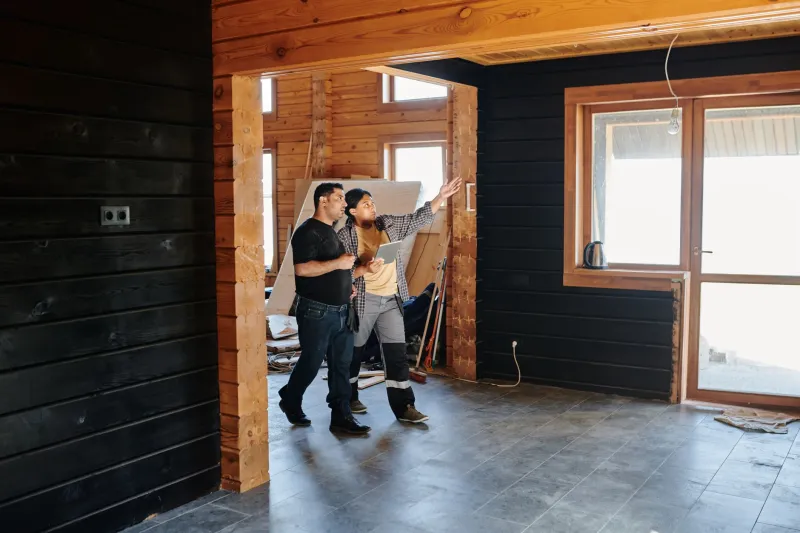
Experienced contractors tend to move through a space with a particular kind of attention. They pause. They crouch down to look at things from unusual angles. They run a hand along a surface, or shine a flashlight into a corner without being asked. That deliberate, unhurried observation is a sign of someone building a real picture of the work ahead.
Contrast that with the provider who breezes through a walk-through in four minutes, barely looking up from their notepad. Speed during a consultation is not efficiency—it is a signal that the estimate you receive will be built on assumptions rather than information. Assumptions lead to surprises, and surprises on home service jobs almost always cost you money.
How They Handle Uncertainty
Every honest contractor eventually encounters something they cannot immediately explain or price with confidence. The question is how they respond. Do they say so plainly, and explain what additional information they would need? Or do they paper over the uncertainty with vague assurances and a ballpark figure that they clearly intend to revisit later?
Providers who are comfortable saying "I need to look into that before I can give you an accurate number" are demonstrating professional integrity. Those who quote confidently on things they visibly do not yet understand are setting the stage for change orders, delays, and disagreements down the road.
The Estimate Itself as a Document of Intent
Pay close attention to how the estimate is delivered. Is it a detailed written breakdown, or a rough figure scrawled on a business card? Does it clearly separate labor from materials? Does it specify what is included—and, just as importantly, what is not?
A vague estimate is not a neutral document. It is a liability transfer. When the scope of work is undefined, the contractor holds all the flexibility and the homeowner holds all the risk. Professionals who take the time to produce clear, itemized estimates are signaling that they intend to be accountable to a specific agreement.
Also note whether they volunteer information about permits, inspections, or code requirements relevant to your project. A provider who raises these topics unprompted understands the full scope of their professional obligations. One who avoids them may be hoping you won't ask.
Respect for Your Time
Did they arrive when they said they would? If they were delayed, did they call ahead? These behaviors during a consultation preview how they will manage communication throughout an actual project. A provider who cannot honor a scheduled appointment window when they are trying to earn your business is unlikely to become more punctual once the contract is signed.
Trust the Composite Picture
No single observation from this list should be treated as a disqualifying signal on its own. A provider might be running late due to a genuine emergency. They might be more introverted in person than their online presence suggests. Context matters.
What you are building during that first consultation is a composite picture. When several of these signals align—when the provider is attentive, asks good questions, handles your space with care, communicates clearly about uncertainty, and delivers a detailed estimate—you have meaningful evidence of professionalism. When several of them point in the opposite direction, no amount of positive reviews should override what you observed firsthand.
Your instincts during that in-person meeting are data. At ServicesCenter, we encourage homeowners to treat them accordingly.